
 Service Hotline:
0951-4095667

Company News
What are the main indicators used to measure the performance of activated carbon?
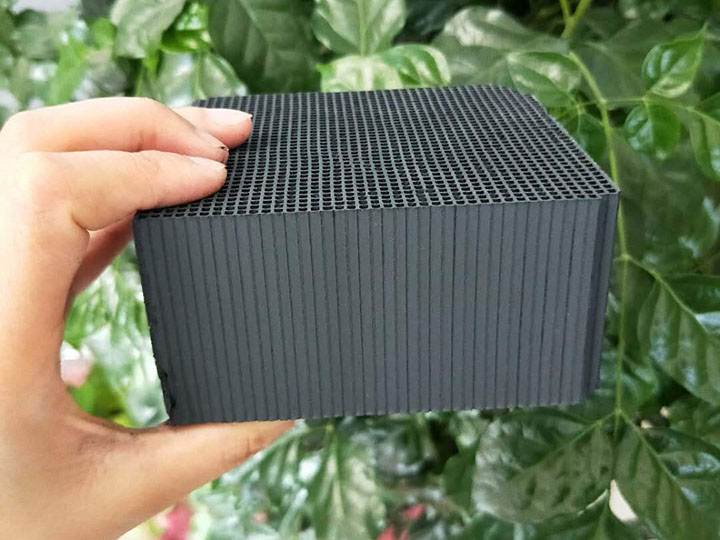
The performance of activated carbon is mainly measured by the following key indicators, which directly affect its effectiveness and efficiency in different applications:
1. Specific surface area:
-The total surface area of activated carbon per unit mass, usually expressed in square meters per gram (m ²/g). The larger the specific surface area, the stronger the adsorption capacity of activated carbon.
2. Pore structure:
-The pores of activated carbon are divided into micropores (<2 nanometers), mesopores (2-50 nanometers), and macropores (>50 nanometers). Different pore structures are suitable for adsorbing molecules of different sizes, micropores are suitable for adsorbing small molecule gases, while mesopores and macropores are suitable for adsorbing larger molecules and liquids.
3. Adsorption capacity:
-The ability of activated carbon to adsorb specific substances under specific conditions, usually expressed in weight percentage or unit volume adsorption capacity. The higher the adsorption capacity, the higher the efficiency of activated carbon.
4. Iodine value:
-Commonly used to measure the microporous content and adsorption capacity of activated carbon. The higher the iodine value, the more micropores there are in activated carbon and the stronger its adsorption capacity.
5. Adsorption value of methylene blue:
-Measuring the ability of activated carbon to adsorb larger molecules is commonly used to evaluate the number of mesopores. Suitable for decolorization applications in water treatment.
6. Hardness and wear rate:
-Hardness represents the ability of activated carbon particles to resist breakage, while wear rate represents the degree of particle damage during use. These indicators affect the service life and regeneration capacity of activated carbon.
7. Ash content:
-The content of non combustible substances in activated carbon, expressed as a weight percentage. High ash content may affect the adsorption performance and regeneration efficiency of activated carbon.
8. Moisture content:
-The water content in activated carbon is expressed as a weight percentage. Excessive moisture content may reduce the adsorption efficiency of activated carbon.
9. pH value:
-The pH value of activated carbon in aqueous solution affects its applicability and adsorption characteristics in water treatment applications.
10. Surface chemical properties:
-The chemical functional groups on the surface of activated carbon can affect its selective adsorption ability for different compounds. These properties can be evaluated through surface chemical analysis.
Through these indicators, the performance of activated carbon can be comprehensively evaluated, helping to select the most suitable product for specific application needs.
Recommended content
- What are the main indicators used to measure the performance of activated carbon?2024-11-15
- What are the key steps in the production process of activated carbon?2024-11-15
- What are the uses of activated carbon?2024-11-15
- How is activated carbon made?2024-11-15
- What are the uses of activated carbon in water treatment?2024-11-15
Navigation
New
- What are the main indicators used to measure the performance of activated carbon?
- What are the key steps in the production process of activated carbon?
- What are the uses of activated carbon?
- How is activated carbon made?
- What are the uses of activated carbon in water treatment?
- What are the effects of different raw materials on key steps in the production process of activated carbon?
Contact Us
Tel:0951-4095667
Tel:0951-4095667
E-mail:88888888@qq.com
Address:Nuanquan Industrial Park, Helan County, Yinchuan City